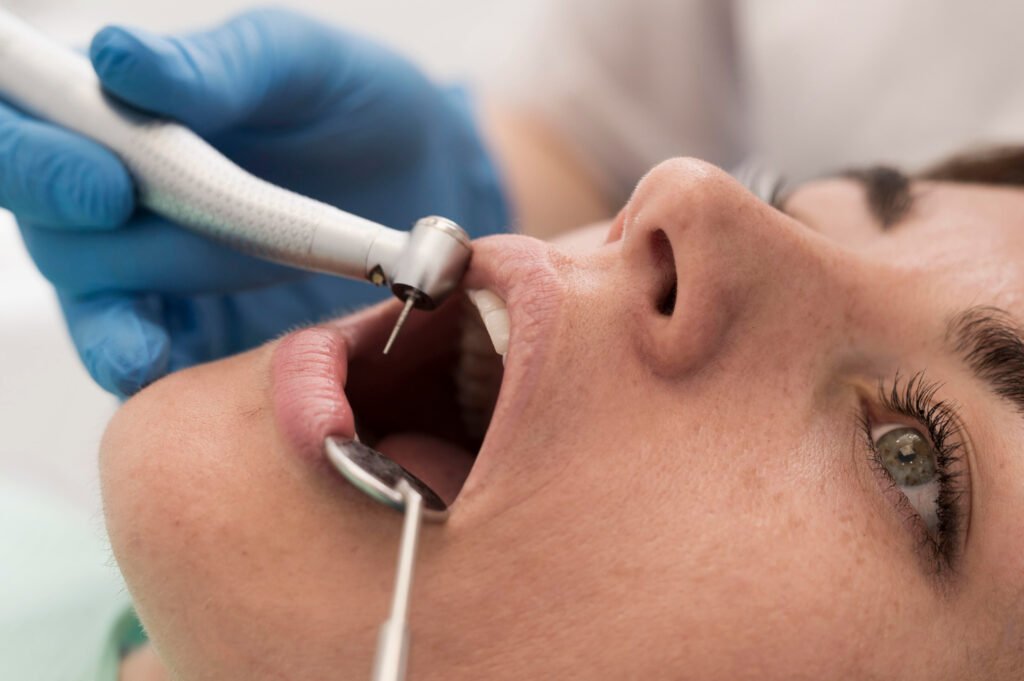
Expert Re-Root Canal Treatment to Preserve Your Natural Tooth
Re-root canal treatment (root canal retreatment) is an advanced endodontic procedure performed when a previously treated tooth does not heal as expected or develops a new infection. Although initial root canal therapy has a high success rate, certain cases may require retreatment to eliminate persistent infection, relieve discomfort, and preserve the natural tooth. At FaceStudio Clinics, we use advanced diagnostic technology and modern endodontic techniques to provide precise, comfortable, and effective retreatment.
Root canal retreatment involves carefully removing the previous root canal filling material, thoroughly cleaning and disinfecting the root canal system, and sealing the canals again to eliminate bacteria and prevent reinfection. This procedure is recommended when the treated tooth develops persistent symptoms or new pathology after the initial treatment.
A previously treated tooth may require retreatment for several reasons, including missed or unusually shaped canals, incomplete cleaning or sealing during the initial procedure, delayed placement of a permanent restoration, recurrent decay around the tooth, or new trauma and fractures. A comprehensive clinical examination combined with digital X-rays or CBCT imaging helps determine whether retreatment is the most appropriate option to save the tooth.
RE-RCT
Re-RCT, or Root Canal Retreatment, is a procedure done when a tooth that previously had a root canal fails to heal properly or becomes infected again. In this procedure, the dentist or endodontist reopens the tooth, removes the old root canal filling, cleans the canals again, treats the infection, and then refills and seals the tooth.
Re-RCT may be needed if:
- The initial root canal did not remove all the infection or bacteria.
- There was complex root anatomy that was missed in the first procedure.
- The tooth was not properly sealed, allowing bacteria to re-enter.
- A crown or filling was delayed or defective, letting infection return.
- The tooth has developed a new problem, such as a crack, decay, or trauma.
Re-RCT is generally successful in 70% to 85% of cases, depending on:
- The cause of the failure
- How much damage has occurred
- The dentist's experience and use of advanced tools (like microscopes)
While the success rate is slightly lower than initial RCT, many teeth can still be preserved long-term with retreatment.
If retreatment fails or the tooth is too damaged:
- Endodontic surgery (like an apicoectomy) may be performed to clean the infection directly at the root tip.
- If the tooth is not restorable, it may need to be extracted.
Tooth replacement options after extraction include:
- Dental implant – the most durable and natural-feeling option.
- Fixed bridge – an artificial tooth anchored to adjacent teeth.
- Removable partial denture – a less invasive, cost-effective solution.