
Apicoectomy (Root-End Surgery)
Apicoectomy (Root-End Surgery) is a conservative surgical treatment used to eliminate persistent infection or inflammation located at the end of a tooth’s root when standard root canal therapy has not fully resolved the issue. Ongoing infection may result from intricate root canal anatomy, untreated accessory canals, recurring bacterial contamination, or leakage from an existing root canal filling. If not treated promptly, the infection can spread into the surrounding bone and soft tissues, leading to discomfort, swelling, bone damage, and possible tooth loss
The diagnostic process includes a thorough clinical assessment along with advanced dental imaging, such as digital periapical X-rays or CBCT scans, to accurately identify the extent and position of the infection near the root tip. This procedure enables the dentist to directly access the affected area, remove the infected tissue and the damaged root end, and preserve the healthy portion of the natural tooth whenever possible.
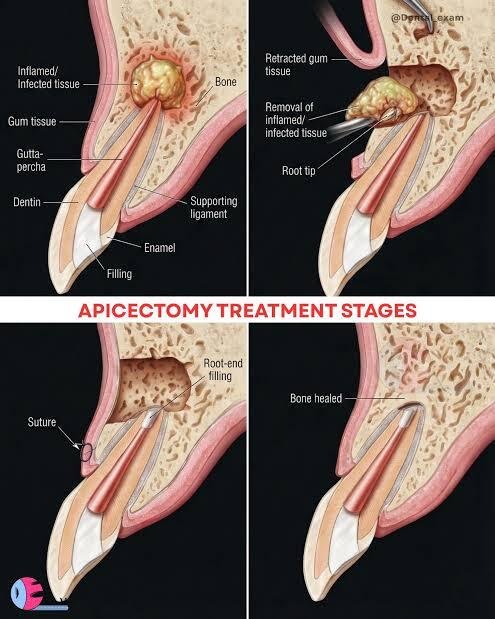
The surgery is performed under local anesthesia to ensure a comfortable and stress-free experience. A small incision is carefully made in the gum tissue to expose the infected root tip. The infected tissue and root end are then removed, and the root canal is sealed from the apex using a biocompatible sealing material to minimize the risk of reinfection. Every treatment plan is customized based on the patient’s oral health, the condition of the affected tooth, and their healing response. Routine post-surgical follow-up appointments are recommended to monitor recovery, verify successful healing, and maintain the long-term function and stability of the treated tooth.
Frequently Asked Questions
When pain or infection persists even after a root canal or retreatment.
No — done under local anesthesia; patients feel pressure, not pain.
Usually about 45–60 minutes per tooth.
Mild tenderness for 3–5 days, manageable with medication.
Success rates exceed 90% with modern techniques.
No, the crown remains intact; only the root tip is accessed.