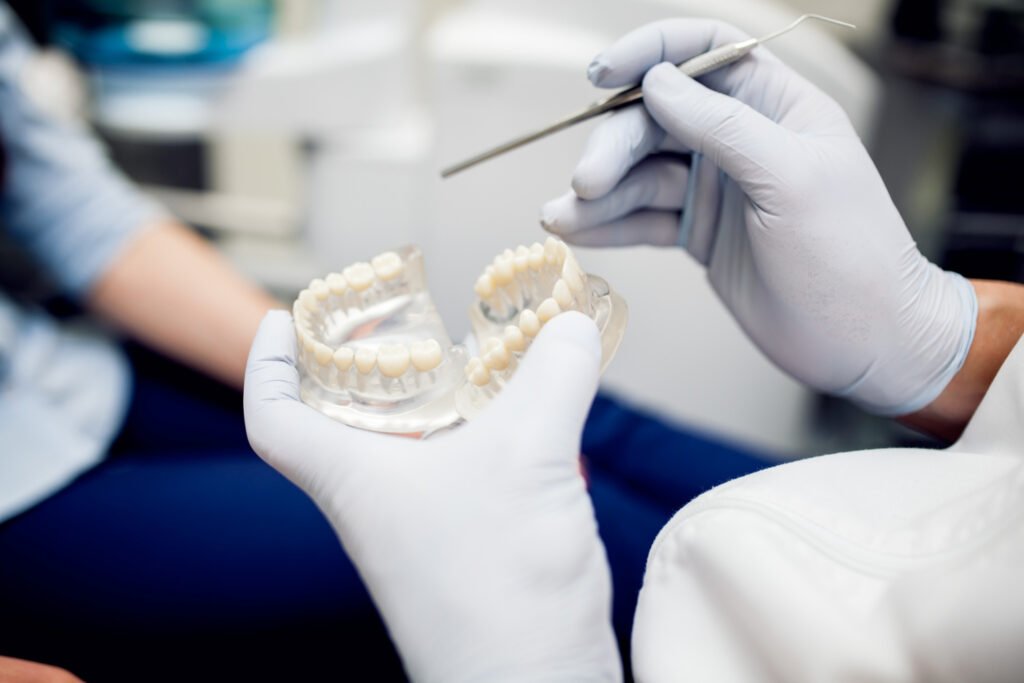
Inlays and onlays are custom-made indirect dental restorations that are fabricated outside the mouth, usually in a dental laboratory, and then securely bonded to the affected tooth. They are commonly crafted from porcelain, composite resin, or gold, providing a durable, natural-looking solution for restoring damaged teeth while preserving as much healthy tooth structure as possible.
Fits within the cusps (raised chewing surfaces) of a tooth. It is ideal for repairing damage or decay that remains inside the tooth and does not involve the outer cusps.
Extends over one or more cusps of the tooth and restores a larger portion of the chewing surface. It is recommended when the damage is more extensive than what an inlay can treat, but does not require a full dental crown.
An inlay or onlay may be the ideal treatment option in the following situations:
| Feature | Inlays & Onlays | Crowns |
|---|---|---|
| Coverage | Restores only the damaged portion of the tooth. Inlays fit inside the tooth, while onlays cover one or more cusps. | Encloses the entire visible portion of the tooth for complete protection. |
| Tooth Preparation | Conservative approach that preserves more healthy tooth structure. | Requires greater reshaping of the tooth before placement. |
| Use Case | Moderate decay, fractures, or replacing large fillings. | Extensive tooth damage, deep fractures, or teeth treated with root canal therapy. |
| Material | Porcelain, composite resin, or gold. | Porcelain, zirconia, metal, porcelain-fused-to-metal, or ceramic materials |
| Longevity | Typically lasts 10–30 years, depending on the material and maintenance. | Typically lasts 10–30 years, depending on the material and maintenance. |

Overall, inlays and onlays provide an excellent balance between traditional fillings and full dental crowns. They offer enhanced strength, natural aesthetics, and long-term tooth preservation while maintaining as much healthy tooth structure as possible.
Monday – Sunday,
Thursday Closed
10:30am to 8:30pm IST