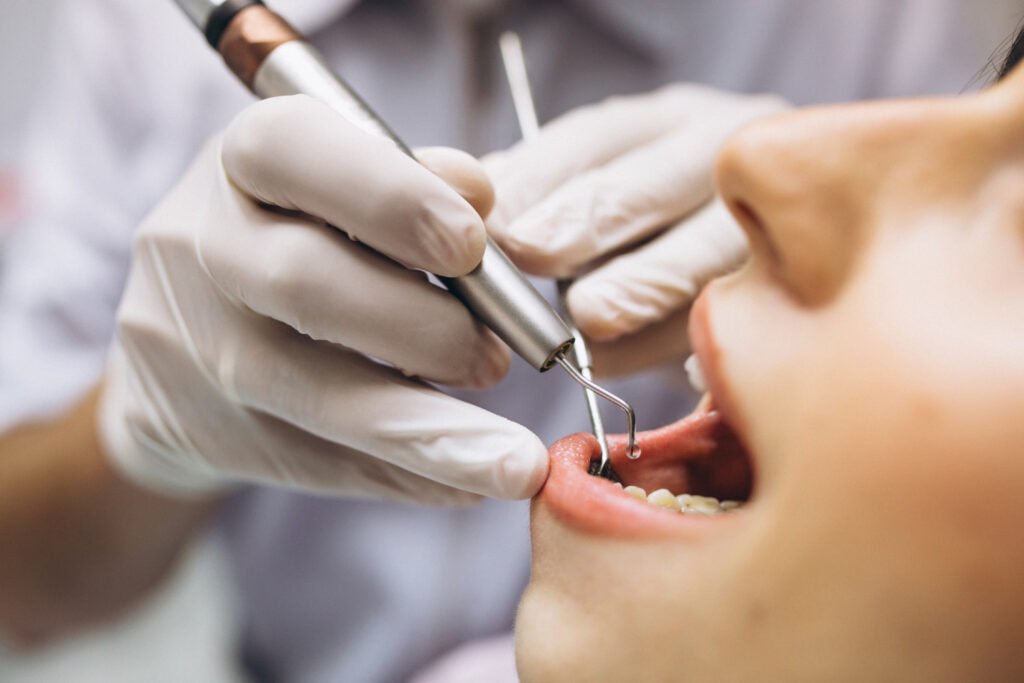
Endodontics

Endodontics is a specialized branch of dentistry that focuses on the diagnosis, prevention, and treatment of diseases and injuries affecting the dental pulp and the periradicular tissues. Derived from the Greek words endo (inside) and odont (tooth), endodontics primarily involves root canal therapy, which aims to save teeth that would otherwise require extraction.

The dental pulp, located in the center of the tooth, contains nerves, blood vessels, and connective tissue. When this tissue becomes inflamed or infected due to deep decay, repeated dental procedures, or trauma, endodontic treatment becomes necessary to eliminate infection and preserve the natural tooth structure.

Modern endodontics integrates advanced technologies such as digital imaging, rotary instrumentation, and surgical microscopes, significantly improving diagnostic accuracy and treatment outcomes. The ultimate goal of endodontic therapy is to relieve pain, maintain natural dentition, and restore normal function and aesthetics.

Root Canal treatment

Root Canal Treatment (RCT) is a dental procedure used to treat infection or damage in the pulp (the soft tissue inside a tooth that contains nerves and blood vessels). Instead of removing the tooth, the dentist removes the infected or inflamed pulp, cleans and shapes the inside of the root canals, and then fills and seals the space. A crown is usually placed afterward to restore and protect the tooth.

  1. Single Visit RCT: In simple cases, RCT can be completed in one visit, typically taking 60–90 minutes.
  2. Multiple Visits: In more complex cases, or if there’s an infection that needs to be monitored, it may take 2–3 visits spaced over a few weeks.

You may need a root canal if:

  1. You have persistent tooth pain, especially when chewing or biting.
  2. You experience sensitivity to hot or cold that lingers.
  3. There’s swelling or tenderness in the gums near the affected tooth.
  4. You have a darkened or discolored tooth (a sign of nerve damage).
  5. There’s deep decay or trauma (like a crack or chip) that reaches the pulp.

After the procedure:

  1. Mild discomfort or sensitivity is common for a few days, especially when chewing.
  2. Your dentist may prescribe pain relievers or antibiotics if necessary.
  3. You’ll usually need to return for a permanent crown, which strengthens the treated tooth.
  1. Initial healing: Most people feel back to normal in a few days.
  2. Full recovery: Once the permanent crown is placed (within 1–2 weeks), you can use the tooth like normal.

After your procedure:

  1. Wait until numbness wears off before eating.
  2. Stick to soft foods for the first 24–48 hours, such as:
    • Mashed potatoes, scrambled eggs, soup, yogurt, smoothies.
  3. Avoid chewing on the treated side until the permanent crown is placed.
  4. Avoid hard, crunchy, or sticky foods that could damage the temporary filling or tooth.

In some cases, the RCT may not fully eliminate the infection or the tooth may become reinfected. If that happens:

  1. Retreatment can be done to remove residual infection.
  2. Endodontic surgery (like an apicoectomy) might be needed to clean infected tissue at the root tip.
  3. If the tooth cannot be saved, extraction may be necessary, followed by a dental implant or bridge.

RE-RCT

Re-RCT, or Root Canal Retreatment, is a procedure done when a tooth that previously had a root canal fails to heal properly or becomes infected again. In this procedure, the dentist or endodontist reopens the tooth, removes the old root canal filling, cleans the canals again, treats the infection, and then refills and seals the tooth.

Re-RCT may be needed if:

  1. The initial root canal did not remove all the infection or bacteria.
  2. There was complex root anatomy that was missed in the first procedure.
  3. The tooth was not properly sealed, allowing bacteria to re-enter.
  4. A crown or filling was delayed or defective, letting infection return.
  5. The tooth has developed a new problem, such as a crack, decay, or trauma.

Re-RCT is generally successful in 70% to 85% of cases, depending on:

  1. The cause of the failure
  2. How much damage has occurred
  3. The dentist's experience and use of advanced tools (like microscopes)

While the success rate is slightly lower than initial RCT, many teeth can still be preserved long-term with retreatment.

If retreatment fails or the tooth is too damaged:

  1. Endodontic surgery (like an apicoectomy) may be performed to clean the infection directly at the root tip.
  2. If the tooth is not restorable, it may need to be extracted.

Tooth replacement options after extraction include:

  1. Dental implant – the most durable and natural-feeling option.
  2. Fixed bridge – an artificial tooth anchored to adjacent teeth.
  3. Removable partial denture – a less invasive, cost-effective solution.

Fillings/Restorations

A filling or restoration is needed when a tooth has a cavity (decay), crack, or minor fracture. The purpose is to:

  1. Remove the decayed portion of the tooth
  2. Restore its structure, function, and strength
  3. Prevent the decay from spreading deeper into the tooth (which could require a root canal or extraction later)

Restorations also help protect the tooth from further damage and maintain a proper bite.

Most fillings are painless, especially with modern dental techniques and local anesthesia.

You may feel pressure or mild sensitivity during or after the procedure, but it typically goes away within a day or two.

For very shallow cavities, anesthesia may not even be needed.

The lifespan depends on the type of filling, the location in the mouth, and oral hygiene. On average:

Composite (tooth-colored): 5–10 years

Amalgam (silver): 10–15 years

Gold: 15–30 years

Ceramic (porcelain): 10–20 years

Glass ionomer: 5–7 years (used more often for temporary or non-load bearing areas)
Proper brushing, flossing, and avoiding hard or sticky foods can extend their life.

Composite Resin (Tooth-Colored)

  1. Matches your natural tooth color
  2. Good for front or visible teeth
  3. Bonds directly to tooth
  4. Less durable for large fillings


Amalgam (Silver)

  1. Very strong and long-lasting
  2. More noticeable
  3. Often used for back molars


Ceramic (Porcelain)

  1. Highly aesthetic and stain-resistant
  2. More expensive
  3. Used for inlays, onlays, crowns


Gold Fillings

  1. Extremely durable
  2. Long-lasting (decades)
  3. More expensive and visible


Glass Ionomer

  1. Releases fluoride to protect the tooth
  2. Less durable
  3. Often used in children or near the gumline

Leaving a cavity untreated can lead to:

  1. Increased pain or sensitivity
  2. Deep decay, reaching the pulp (nerve), requiring a root canal
  3. Tooth infection or abscess
  4. Tooth fracture or loss
  5. Spread of infection to surrounding areas, including the jawbone

Early treatment with a simple filling is faster, cheaper, and less invasive than dealing with advanced tooth decay.

Post and Core

What is a Post and Core?

A Post and Core is a dental restoration used to rebuild a severely damaged tooth after root canal treatment (RCT), so that a crown can be securely placed on top.
Core: A filling material (composite or other dental material) that rebuilds the main body of the tooth.
Post: A rod (usually metal or fiber-reinforced) inserted into the root canal to help anchor the core in place, especially when there’s not enough tooth structure left above the gumline.
It’s like creating a foundation and support pillar for a crown on a tooth that’s otherwise too weak or broken down.

When is a Post and Core Required?

When is a Post and Core Required?
  • You’ve had a root canal, and most of the natural tooth is missing or destroyed.
  • There’s not enough tooth structure to hold a crown on its own.
  • The remaining tooth is too weak to support normal chewing forces.
It is not always needed after RCT — only when the tooth is severely compromised.
Benefits

Benefits of Post and Core